Introduction
Why Health and Wealth Belong Together
The adage "health is riches" underscores the profound connection between health and financial well-being. Current research illustrates that health affects not only income and work capacity but also the amount spent on medical care and prescriptions. Conversely, income and savings influence dietary choices, healthcare access, and daily stress levels. In this guide, the relationship between wealth and health is explored, highlighting research from reputable institutions and practical advice for individuals. It emphasizes that wealth is not a prerequisite for health, and consistent small efforts are more beneficial than sporadic large ones. The article serves as general education, advising readers to consult certified professionals for personalized advice.
What Do We Mean by Health and Wealth?
Health is defined by the World Health Organization as a state of complete physical, mental, and social well-being, encompassing relationships, bodily function, and cognitive state, rather than merely the absence of illness. A monthly paycheck is just one aspect of wealth, which also includes earnings, savings, assets, skills, and the ability to handle financial shocks without debt. Two families with identical incomes may have different financial security; for instance, a family with savings and no debt is better positioned in case of illness.Both good health and wealth are interconnected, forming a loop where each can positively influence the other. Proper management of wealth can protect health, but a breakdown in either can adversely affect the other.
What Research Says About the Link Between Health and Wealth
Research in public health extensively explores the connection between health and finances, leading to several important conclusions from credible sources.Higher income is linked with longer life
Over one billion US tax data from 1999 to 2014 were analyzed in a study published in the Journal of the American Medical Association. It found that higher income correlates with longer life expectancy, with men in the richest 1% living over 14 years longer and women over 10 years longer than those in the poorest 1%. The study also noted that this disparity has been increasing
over time.
Health problems can hurt family finances
Income and health have a reciprocal relationship, as highlighted in a 2015 brief from Virginia Commonwealth University and the Urban Institute. Poor health can hinder earning potential, while higher income can facilitate better health outcomes. Additionally, research from the National Bureau of Economic Research indicates that both acute and chronic illnesses can diminish family wealth, especially in families without health insurance.
Chronic disease and debt travel together
According to a University of Michigan study, individuals with a greater number of chronic diseases are more likely to experience medical debt in collections, additional debt, low credit scores, and previous bankruptcies. The researchers identified two main causes: the direct costs of care and the decreased earning capacity due to illness.Money does not guarantee health everywhere
In a 2025 study published in the New England Journal of Medicine, it was found that life expectancy in the US was lower than in other wealthy nations, even among affluent individuals. This highlights that income alone does not determine health outcomes; factors such as the healthcare system, diet, environment, and social support also significantly influence health. Although wealth and health often correlate, the relationship is complex, affected by various intervening factors.
How Poor Health Drains Your Wealth
It helps to see exactly how illness can damage finances.
Expenses for treatment, including hospital stays, tests, prescription drugs, and doctor visits, can accumulate rapidly, particularly for families paying out of pocket. Additionally, lost revenue occurs when individuals are unable to work, leading to considerable income losses, even with a short illness, affecting farmers, small business owners, and daily wage workers. Caregiver responsibilities can impose significant hidden costs on families, as one member may reduce work hours to care for a sick relative. This often leads to forced asset sales, where families resort to loans or selling valuables like jewelry, land, or cattle to afford medical care, potentially causing long-term financial strain.
The lesson emphasizes that prevention is generally more cost-effective than treatment, highlighting that a minor initial investment in healthy habits can lead to substantial long-term savings.
How Wealth Can Protect and Improve Health
Financial stability enhances health in multiple ways, with the link functioning in both directions.
Better nutrition.
Daily health relies on adequate funding for fresh fruits, vegetables, protein, and clean drinking water.
Access to care.
Visiting a doctor early is easier when one has savings or insurance, preventing minor issues from escalating into major ones.
Safer living conditions.
Better housing, clean water, and sanitation reduce the risk of infection and disease.
Less stress.
Constant money worry affects sleep, mood, and blood pressure. A financial cushion brings peace of mind, and peace of mind is itself good for health.
Time for rest and exercise.
When you are not forced to work endless hours, you can protect time for sleep, movement, and family.
There are alternative paths to excellent health beyond income, such as walking, adequate sleep, and avoiding tobacco, which are affordable habits beneficial to all income groups.
The Physical Activity Habit: A Low-Cost Investment
Regular exercise is an affordable health habit for most individuals. Those aged 18 to 64 should aim for 150 to 300 minutes of moderate-intensity aerobic activity or 75 to 150 minutes of vigorous-intensity weekly, as recommended by the World Health Organization. Additionally, muscle-strengthening exercises are advised at least two days a week. Active domestic tasks, cycling, and brisk walking represent moderate activity levels. The WHO notes that individuals over 65 focus more on strength training and balance to prevent falls. Children and teenagers are recommended to participate in moderate-to-intense physical activities for a minimum of 60 minutes daily on average. Engaging in brisk walking for about thirty minutes five days a week can significantly lower the risk of various health issues, including heart disease and type 2 diabetes. This form of exercise does not require a gym membership and offers high health benefits at a low cost. However, individuals with specific health concerns should consult their doctor before starting a new exercise regimen.
10 Practical Habits for Better Health and Wealth
Here are ten simple habits that support both your body and your bank balance.
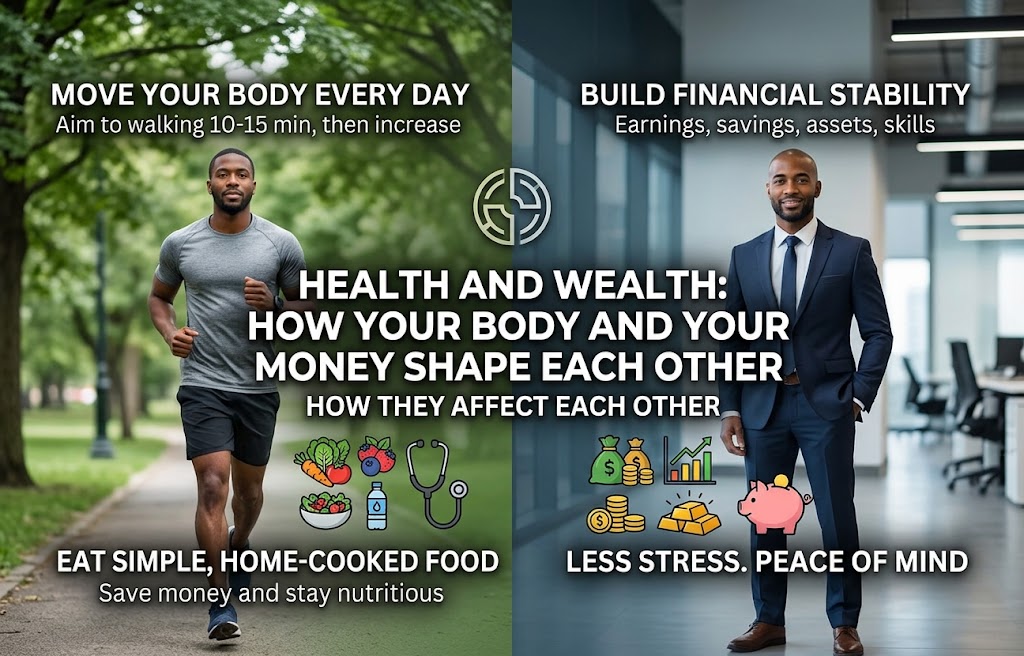
Move your body every day
Aim to progressively meet WHO targets by walking for ten to fifteen minutes initially, then increasing duration. Walking to the market instead of driving can save money and energy.
Eat simple, home-cooked food
Home-cooked meals with vegetables, lentils, eggs, salmon, and seasonal fruits are generally more nutritious and cost-effective than packaged foods. Reducing sugary drinks and processed snacks also improves health and finances.
Sleep enough
Most individuals need seven or more hours of sleep each night, as recommended by health organizations like the US Centers for Disease Control and Prevention. Adequate sleep improves concentration and decision-making, which positively impacts workplace performance and financial decisions.
Avoid tobacco and limit harmful habits
Tobacco usage is costly for health and finances. Quitting reduces the risk of serious illnesses and leads to significant monthly savings. Assistance from a physician or health service can be beneficial for those struggling to quit.
Build an emergency fund
It is advisable to maintain three to six months' worth of living expenses in an easily accessible account. If this seems too high, begin with a smaller goal, such as covering monthly costs, and gradually save a set amount each week. Even small savings can help avert debt issues from medical emergencies.
Consider health protection
Compare health insurance and community health programs to assess their accessibility and suitability. Analyze aspects like coverage, exclusions, and waiting periods. Research indicates that lack of insurance significantly harms household wealth during illness.
Go for regular check-ups and screenings
Treating conditions like high blood pressure, diabetes, and certain cancers is often more manageable and cost-effective when identified early. Consult your doctor about suitable screenings based on your age and family history.
Manage stress and protect mental health
Poor mental health and financial strain can mutually worsen. To manage ongoing stress or depression, seek support from trusted loved ones, take breaks, spend time outdoors, and consider professional help. Mental health care is essential for overall well-being.
Make a budget and track it
Record your earnings and expenses for a month to identify small leakages, such as unused subscriptions and impulsive purchases. Categorize spending into needs, wants, and savings, with savings occupying a specific role in your financial plan.
Keep learning and build your skills
Education and skills enhance long-term earning power and are linked to longer life expectancy, with acquiring new skills being a valuable investment that increases both confidence and earnings.
Common Myths About Health and Wealth
Myth 1: Only rich people can be healthy. Effective health practices such as walking, adequate sleep, and avoiding tobacco are inexpensive, despite the advantages of wealth.
Myth 2: Spending on health is a waste when money is tight.Healthy lifestyle choices and preventive care are usually much less costly than treating serious illnesses later.
Myth 3: Getting rich will automatically make you healthy.Healthy behaviors and preventive care are usually much less costly than managing a catastrophic illness later.
Myth 4: Savings can wait until I am older.Establishing an emergency fund can protect individuals of any age against illnesses throughout their life.
A Simple Weekly Plan to Start Today
If all this feels like a lot, try this small plan for the next four weeks.
Week 1: Walk for 20 minutes on at least four days. Write down every expense.
Week 2:Incorporate two vegetable-rich, home-cooked meals into your daily diet and establish a separate savings account or box for your emergency fund, making regular deposits.
Week 3: Fix a regular bedtime. Review your expense list and cancel one unnecessary spending item.
Week 4:Book any overdue health check-up. Increase your walking to 30 minutes on five days.
Small steps repeated for months create results that last for years.
Frequently Asked Questions
What is the relationship between health and wealth?
Wealth and health influence each other; wealth allows for better nutrition and living conditions, while good health enables better work potential. Conversely, poor health can decrease income and increase expenses, leading to a worsening cycle.
How much exercise do adults need each week?
The World Health Organization recommends that individuals aged 18 to 64 engage in 150 to 300 minutes of moderate-intensity aerobic activity or 75 to 150 minutes of vigorous activity weekly, plus at least two days of muscle-strengthening exercises.
How can I protect my finances from medical costs?
Establish an emergency fund, consider suitable health plans or insurance, engage in preventive care, and avoid risky behaviors such as smoking. Typically, early treatment is more cost-effective than late intervention.
Does having more money always mean better health?
Numerous studies suggest a link between higher income and longer life, but factors like stress, environment, lifestyle, and healthcare quality also play significant roles.
Where should I start if I have very little money?
Start with free habits: daily walking, enough sleep, drinking clean water, and tracking your spending. Then add a small weekly saving, even if it is a tiny amount.
Conclusion: Invest in Both
Wealth and health are interrelated; maintaining good health supports financial stability. Saving money alleviates financial stress, allowing for better health. Research indicates that small, consistent financial decisions can yield significant long-term benefits. Making incremental lifestyle changes—such as walking more, improving diet, saving weekly, and visiting a doctor—can lead to a longer and healthier life over time.
Disclaimer:This text emphasizes that the information provided is general and not a substitute for professional financial, legal, or medical advice. It advises individuals to consult with knowledgeable experts for guidance tailored to their specific circumstances.
References
- World Health Organization, physical activity recommendations for adults and children:WHO Be Healthy: Physical activity
- WHO 2020 guideline summary, including health benefits of regular activity:CBS News: The type and amount of exercise you need, WHO advises
- Urban Institute and VCU Center on Society and Health (2015):How Are Income and Wealth Linked to Health and Longevity?
- JAMA income and life expectancy study (2016), as reported by The Nation's Health:Income inequality: When wealth determines health
- National Bureau of Economic Research, working paper on health and wealth dynamics:NBER Working Paper w16857
- University of Michigan study on chronic conditions and medical debt:Medical Economics (2022) andKFF Health News (2022)
- New England Journal of Medicine study on wealth and health in the US and Europe, as reported by NPR (2025):The richest Americans live about as long as the poorest Europeans