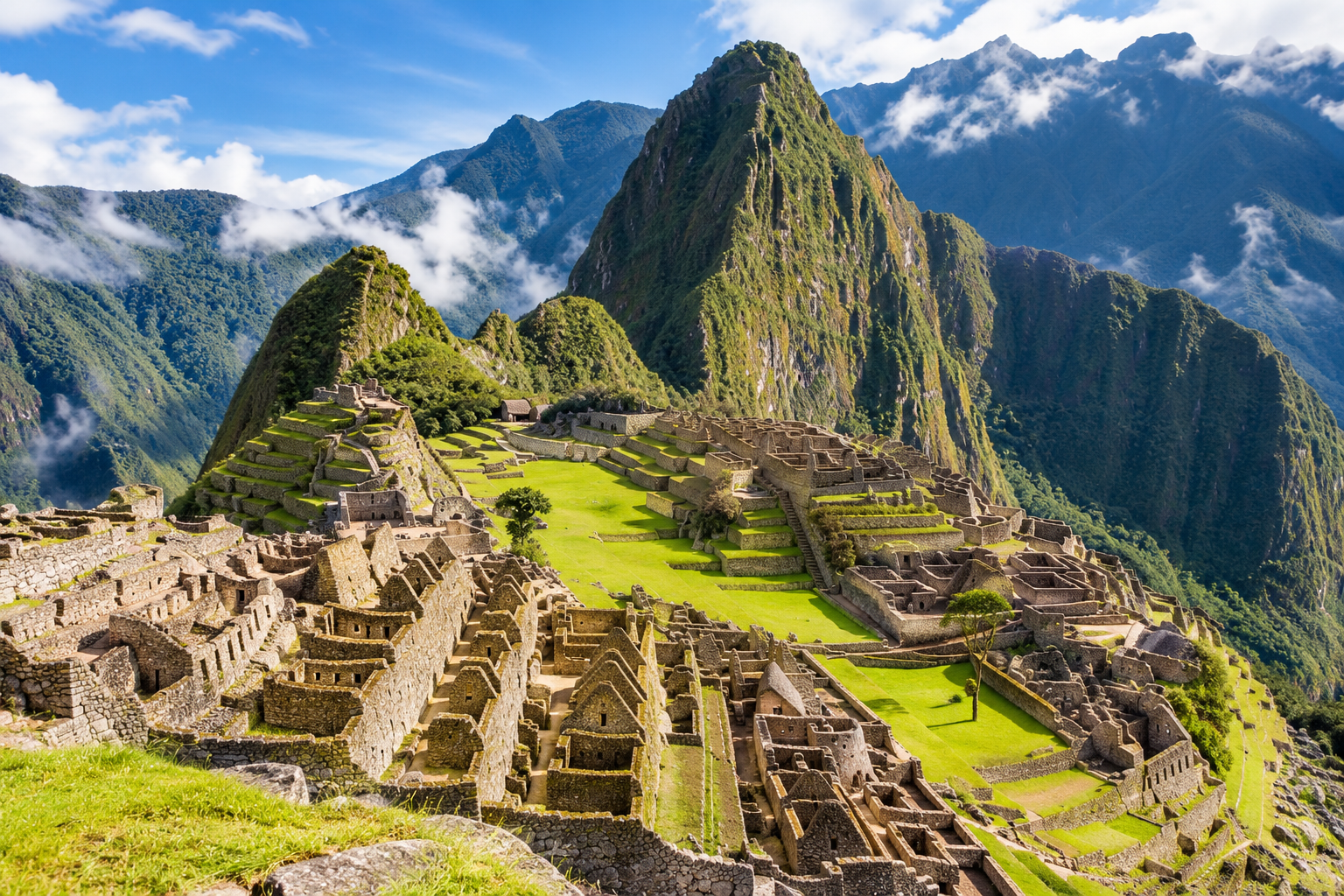
Located in Mexico’s Yucatán Peninsula, Chichén Itzá is one of the most remarkable archaeological sites of the ancient Maya civilization. Famous for its monumental pyramids, sophisticated architecture, astronomical knowledge, and ceremonial structures, this historic city offers valuable insights into the cultural, religious, and political life of pre-Hispanic Mesoamerica. Recognized as a UNESCO World Heritage Site in 1988, Chichén Itzá is considered one of the most important archaeological remains of the Maya-Toltec civilization.
1. The Historical Background of Chichén Itzá
The history of Chichén Itzá spans nearly a thousand years. The settlement developed around natural water-filled cavities known as cenotes, which provided access to underground freshwater in the limestone landscape of the Yucatán Peninsula. The name Chichén Itzá is commonly interpreted as referring to the edge or mouth of the wells of the Itza people.
According to historical accounts cited by UNESCO, the settlement may have been established as early as the fifth century CE. During its early development, particularly between the sixth and tenth centuries, the city featured buildings constructed in the architectural style associated with the Maya communities of the Puuc region.
Among the important structures associated with this early period are the Nunnery, the Church, Akab Dzib, Chichan Chob, the Temple of the Panels, and the Temple of the Deer. These monuments demonstrate the architectural sophistication and artistic traditions of the ancient Maya.
2. The Rise of the Maya-Toltec Civilization
One of the most significant developments in the history of Chichén Itzá occurred around the tenth century. During this period, cultural influences associated with the Toltecs of central Mexico became increasingly prominent in the region. The interaction between Maya and central Mexican traditions contributed to a distinctive architectural and artistic style.
UNESCO's historical account discusses traditions connecting the Toltec ruler Ce Acatl Topiltzin Quetzalcoatl with Kukulkan, the Maya name associated with the Feathered Serpent deity. Some traditional accounts link this figure with the city's political and cultural transformation. However, the precise historical details and the nature of these connections remain subjects of scholarly discussion.
The resulting Maya-Toltec cultural synthesis can be seen in Chichén Itzá's monumental buildings, sculptural decorations, religious symbolism, and ceremonial spaces. The city became a major centre of regional influence between the tenth and fifteenth centuries.
3. El Castillo: The Temple of Kukulkan
The most recognizable monument at Chichén Itzá is El Castillo, also known as the Temple of Kukulkan. This impressive stepped pyramid stands as a powerful symbol of Maya architectural and mathematical knowledge.
The pyramid's design reflects the importance of geometry, calendrical systems, and religious symbolism in Maya society. Its four stairways lead toward a temple at the summit. The structure is particularly famous for the shadow effect that appears along its staircase during the equinox periods, creating the impression of a serpent descending the pyramid. This visual phenomenon is widely associated with Kukulkan, the Feathered Serpent deity.
El Castillo demonstrates how architecture could serve several purposes simultaneously: religious worship, ceremonial activities, symbolic representation, and the expression of political authority. It remains one of the finest examples of monumental architecture in Mesoamerica.
4. The Great Ball Court
The Great Ball Court is another outstanding monument at Chichén Itzá. It is among the largest known ancient ball courts in Mesoamerica and provides evidence of the importance of ritual ball games in pre-Hispanic societies.
Mesoamerican ball games were more than recreational activities. They could carry religious, political, and ceremonial significance. The court's monumental walls and sculpted decorations reflect the prestige attached to these events.
The surrounding architectural complex includes the Temple of the Jaguars, the Skull Wall or Tzompantli, and the House of Eagles. Together, these structures illustrate the complex relationship between sport, ritual, warfare, and religious belief in the ancient city.
5. The Temple of the Warriors and the Thousand Columns
The Temple of the Warriors is one of Chichén Itzá's most impressive architectural complexes. Its columns, sculptural features, and monumental design demonstrate the artistic achievements of the Maya-Toltec tradition.
Nearby, the Group of the Thousand Columns forms an extensive architectural area associated with ceremonial and other public activities. The columns create a distinctive visual landscape and reveal the scale of construction undertaken by the city's inhabitants.
These monuments are especially important for understanding how architecture communicated authority, organized public space, and expressed cultural identity.
6. El Caracol: The Ancient Observatory
El Caracol, meaning “the snail” in Spanish, is a distinctive circular building at Chichén Itzá. Its name comes from the spiral staircase inside the structure.
The building is widely interpreted as an astronomical observatory because of its unusual design and the orientation of certain openings. Astronomical observations were important to Maya society, influencing calendrical calculations, agricultural activities, and religious ceremonies.
Although the precise functions of individual architectural features remain open to interpretation, El Caracol demonstrates the importance of observing celestial movements in Maya intellectual and cultural life.
7. Why Was Chichén Itzá Built Near Cenotes?
The Yucatán Peninsula is characterized by porous limestone, which allows rainwater to pass underground. In many areas, natural sinkholes called cenotes provide direct access to groundwater.
These water sources were essential to settlements in a region where surface rivers are limited. Their importance at Chichén Itzá was therefore practical as well as cultural. Cenotes supplied water and could also hold religious significance in Maya cosmology and ceremonial practices.
The relationship between the city and its natural environment illustrates how geography influenced the development of ancient urban centres.
8. The Decline of Chichén Itzá
Chichén Itzá experienced significant political and cultural changes over the centuries. According to UNESCO's account, major monumental construction appears to have declined after the thirteenth century, and the city underwent a rapid decline around 1440 CE.
The exact reasons for its decline are not fully established. Political changes, shifting regional power structures, and other social or environmental factors may have contributed. It is important not to assume that the city's decline meant the complete disappearance of the Maya people or their culture.
Although the city lost much of its former political importance, its monuments survived. Archaeological investigations began in the nineteenth century, helping researchers document and interpret this extraordinary historic site.
9. UNESCO World Heritage Status
The Pre-Hispanic City of Chichén Itzá was inscribed on the UNESCO World Heritage List in 1988. Its inscription recognizes its exceptional architectural, historical, and cultural significance.
UNESCO identifies three criteria for its inscription:
- Criterion (i): Chichén Itzá's monuments are masterpieces of Mesoamerican architecture, distinguished by their proportions, construction techniques, and sculptural decoration.
- Criterion (ii): Its monuments influenced the cultural development of the wider Yucatán region between the tenth and fifteenth centuries.
- Criterion (iii): The site is a major archaeological testament to the Maya-Toltec civilization of Yucatán.
These criteria explain why Chichén Itzá is important not only to Mexico but also to the study of world history and cultural heritage.
10. Conservation Challenges and Protection
Despite the survival of many monuments, Chichén Itzá faces challenges associated with tourism, environmental deterioration, infrastructure development, and the long-term conservation of ancient limestone structures.
Mexico's Federal Law on Monuments and Archaeological, Artistic and Historic Zones provides legal protection for the site. A presidential decree in 1986 also declared it an archaeological monument.
The National Institute of Anthropology and History (INAH) is responsible for archaeological research and conservation, while the relevant state tourism authority contributes to the management of visitor services.
Sustainable tourism, scientific monitoring, adequate conservation funding, and effective emergency planning are essential to protect the site's historical integrity for future generations.
11. Why Chichén Itzá Matters Today
Chichén Itzá provides a valuable opportunity to understand the achievements of ancient American civilizations. Its architecture reveals advanced engineering and artistic skills, while its ceremonial structures provide evidence of complex religious and political traditions.
The site also demonstrates how different cultural traditions can interact and produce distinctive forms of artistic expression. The combination of Maya and central Mexican influences makes Chichén Itzá particularly important for studying cultural exchange in pre-Hispanic Mesoamerica.
Today, it remains a major destination for visitors, researchers, historians, and archaeologists. Its continued protection is essential not only for Mexico's cultural heritage but also for humanity's shared historical legacy.
Conclusion
The Pre-Hispanic City of Chichén Itzá stands as an enduring testament to the architectural brilliance, astronomical interests, religious traditions, and cultural interactions of ancient Mesoamerica. From the towering Temple of Kukulkan to the Great Ball Court and the circular observatory of El Caracol, its monuments preserve evidence of a sophisticated civilization that shaped the history of the Yucatán Peninsula.
Its UNESCO World Heritage status recognizes this exceptional legacy. Preserving Chichén Itzá through responsible tourism, archaeological research, and long-term conservation will ensure that future generations can continue to learn from one of the world's most remarkable historic cities.
References
- UNESCO World Heritage Centre — Pre-Hispanic City of Chichén Itzá
- National Institute of Anthropology and History (INAH), Mexico
This article is intended for educational and historical information. Historical interpretations may evolve as archaeological research advances.